All 18 penguins
The Australian Antarctic Division counts 18 species. Each one is here, with its IUCN Red List category as it stood on the day we checked.
The Australian Antarctic Division counts 18 species of penguins. 5 of them live in Antarctica, and another 4 live on sub-Antarctic islands. Australian Antarctic Division: Penguins · checked 27 Oct 2026
- The Australian Antarctic Division counts 18 species of penguins. 5 of them live in Antarctica, and another 4 live on sub-Antarctic islands. Australian Antarctic Division: Penguins · checked 27 Oct 2026
- The Smithsonian says there is still debate over the number of species, but it’s generally agreed there are between 17 and 19, split into six genera. Smithsonian Ocean: Penguins · checked 27 Oct 2026
Experts still debate where one species ends and the next begins. Every disagreement we found →
Red List categories and population trends are copied from each species’ IUCN Red List page (or, for the northern rockhopper, BirdLife International’s factsheet), checked 27 Oct 2026. They are reassessed every few years, so follow the links for the latest.
Aptenodytes
The two biggest penguins: the emperor and its closest relative, the king.
Pygoscelis
Three penguins of Antarctica and its islands.
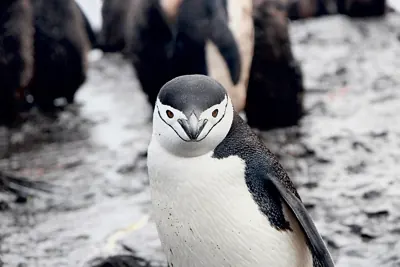
Eudyptes
The crested penguins, with yellow plumes on their heads.
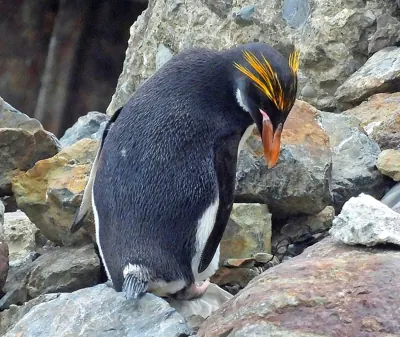 No. 06Macaroni penguinEudyptes chrysolophus
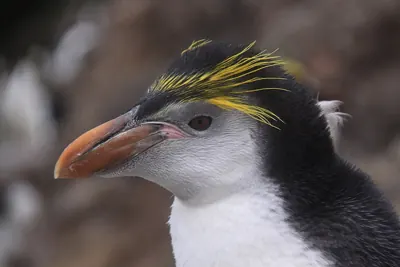 No. 07Royal penguinEudyptes schlegeli
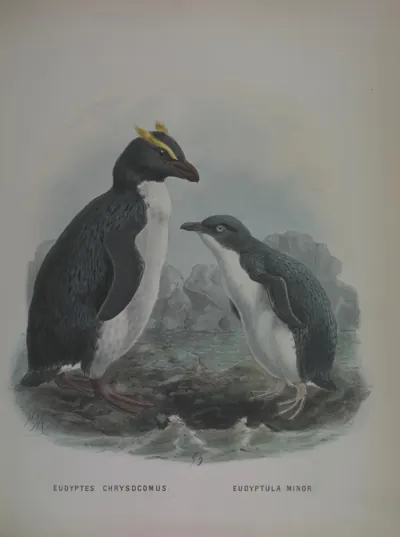 No. 08Southern rockhopper penguinEudyptes chrysocome
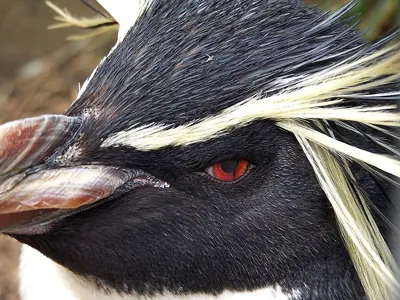 No. 09Northern rockhopper penguinEudyptes moseleyiNo. 10Fiordland penguinEudyptes pachyrhynchusNo. 11Snares penguinEudyptes robustus
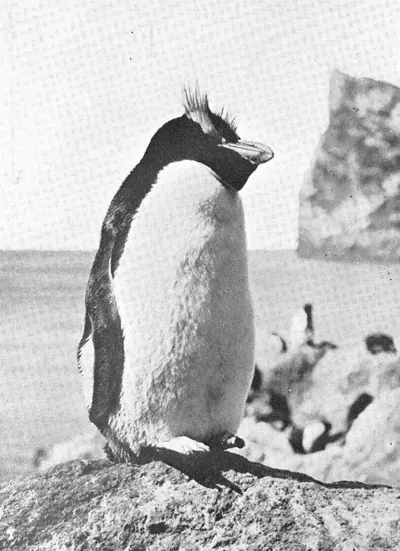 No. 12Erect-crested penguinEudyptes sclateri
Megadyptes
One species, found only in New Zealand.
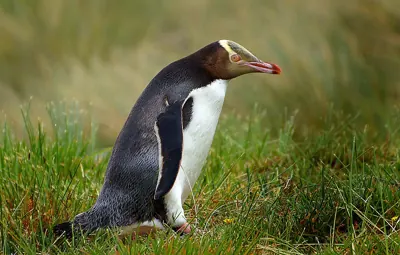
Eudyptula
The smallest penguin.
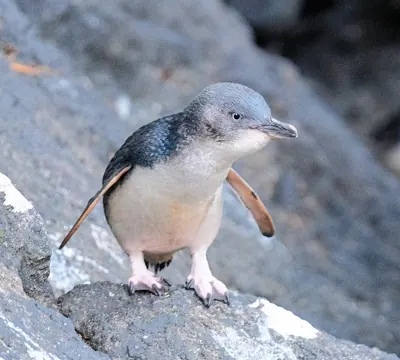
Spheniscus
Penguins of warmer coasts: Africa, South America and the equator.
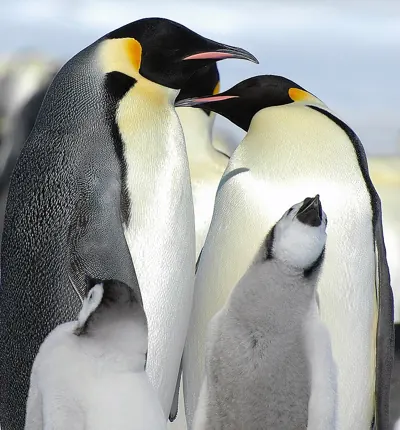
No. 01 · Aptenodytes forsteri
Emperor penguin
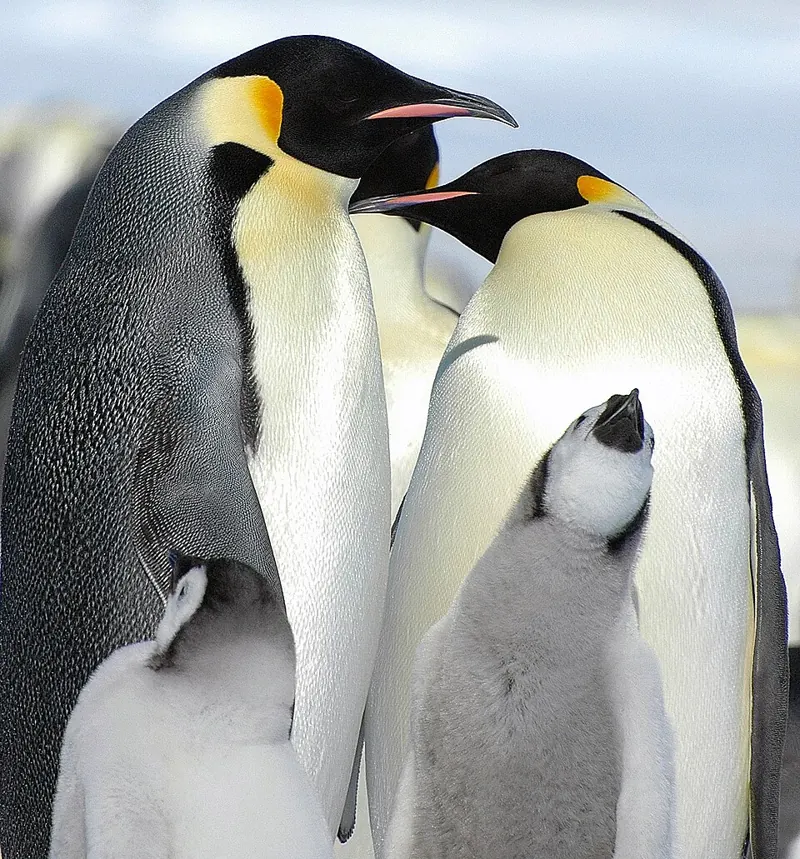
- The emperor is the largest penguin. The Australian Antarctic Division says adults can weigh up to 40 kg at the start of the breeding season. Australian Antarctic Division: Emperor penguin
- The Smithsonian says the emperor stands 4 foot 5 inches (1.35 metres) tall, and gives its maximum size as 51 inches (130 cm) and 88 pounds (40 kg). Smithsonian Ocean: Penguins
- Britannica gives the emperor as 115 cm (45 inches) tall and 25 to 40 kg. Britannica: Penguin
- WWF-UK says emperors stand around 110–130 cm tall, and weigh 23–45 kg depending on the time of year. WWF-UK: Emperor penguins
- Emperor parents share chick-rearing, but only the males incubate the egg. Australian Antarctic Division: Emperor penguin
- Emperor penguin: Near Threatened on the IUCN Red List (last assessed 2019). Population trend: decreasing. IUCN Red List: Emperor penguin · checked 27 Oct 2026
- The Australian Antarctic Division’s emperor penguin page gives its conservation status as endangered, and expects a moderately rapid decline over the next three generations because of climate change. Australian Antarctic Division: Emperor penguin · checked 27 Oct 2026
- National Geographic’s emperor penguin page lists it as Near Threatened with a current population trend of ‘stable’. National Geographic: Emperor penguin · checked 27 Oct 2026
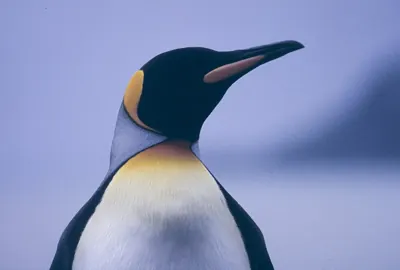
No. 02 · Aptenodytes patagonicus
King penguin
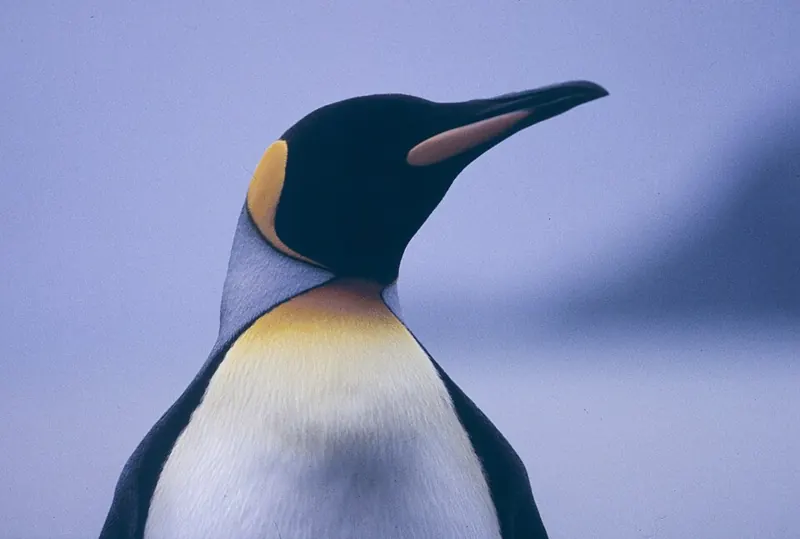
- King penguins stand 85–95 cm tall. Australian Antarctic Division: King penguin
- Kings were once thought to be the largest penguins. Only in 1844 did George Robert Gray of the British Museum separate them from the even larger emperor. Their genus name, Aptenodytes, means ‘featherless diver’. Australian Antarctic Division: King penguin
- King penguins breed on many sub-Antarctic islands between 45° and 55° south. Australian Antarctic Division: King penguin
- King penguins don’t build a nest: they incubate the egg on their feet, for about 54 days. Australian Antarctic Division: King penguin
- King penguins mainly eat lantern fish, especially during the breeding season. Australian Antarctic Division: King penguin
- King penguin: Least Concern on the IUCN Red List (last assessed 2020). Population trend: increasing. IUCN Red List: King penguin · checked 27 Oct 2026
- There are approximately 1.6 million breeding pairs of king penguins. Australian Antarctic Division: King penguin · checked 27 Oct 2026
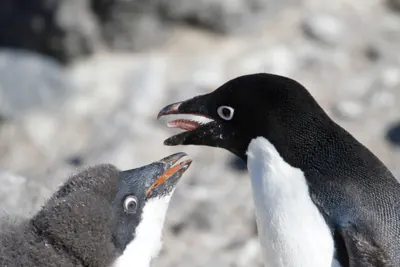
No. 03 · Pygoscelis adeliae
Adélie penguin
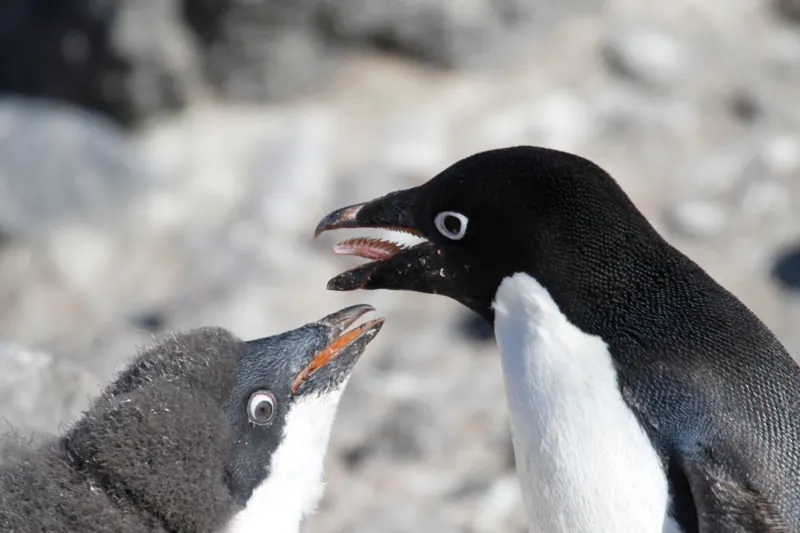
- Adélie penguins weigh 3 to 6 kg and stand 70 cm tall. Look for the white ring around the eye. Australian Antarctic Division: Adélie penguin
- Adélie penguins are named after Adélie Land in Antarctica, which the explorer Jules Dumont d’Urville named after his wife, Adéle. Australian Antarctic Division: Adélie penguin
- Adélie penguins need ice-free land with lots of pebbles to build their nests. By mid-November there are 2 eggs in the nest. Australian Antarctic Division: Adélie penguin
- Adélie penguins walk on ice at about 2.5 km/h and swim at 4 to 8 km/h. They can also toboggan along on their bellies. Australian Antarctic Division: Adélie penguin
- Adélie penguins have a life expectancy of 10 to 20 years. Australian Antarctic Division: Adélie penguin
- Adélie penguin: Least Concern on the IUCN Red List (last assessed 2020). Population trend: increasing. IUCN Red List: Adélie penguin · checked 27 Oct 2026
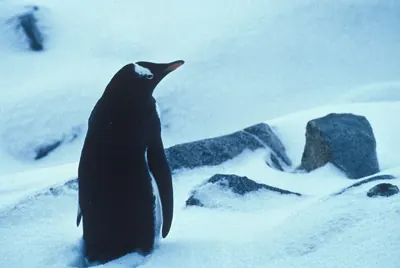
No. 04 · Pygoscelis papua
Gentoo penguin
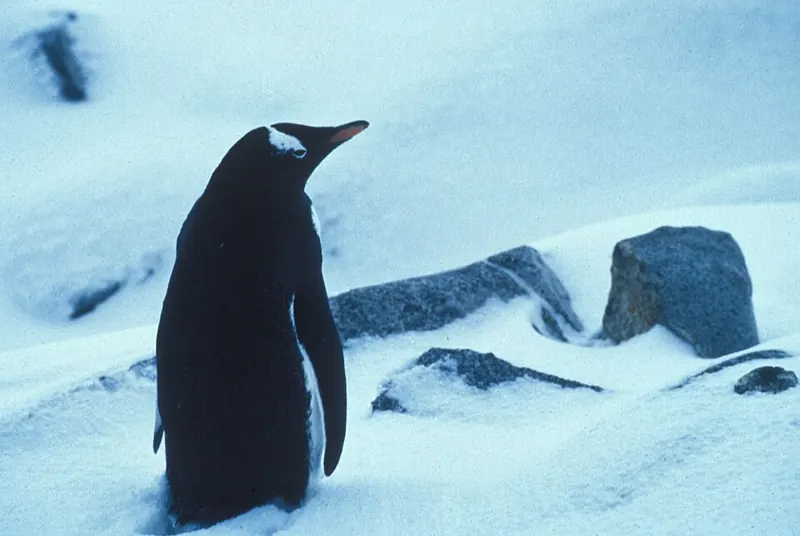
- Gentoo penguins have a bright red-orange bill and white eye patches. They are the third largest penguin species alive, at 5–8 kg. Australian Antarctic Division: Gentoo penguin
- Gentoo penguins lay two eggs, incubated for 34–37 days. Chicks start to gather in crèches at about 26 days old and fledge at 80–90 days. Australian Antarctic Division: Gentoo penguin
- Britannica says gentoo penguins are the world’s fastest underwater birds, reaching up to 36 km (about 22 miles) an hour. Britannica: Penguin · checked 27 Oct 2026
- Gentoo penguin: Least Concern on the IUCN Red List (last assessed 2019). Population trend: stable. IUCN Red List: Gentoo penguin · checked 27 Oct 2026
- The gentoo’s total breeding population is approximately 387,000 pairs. Australian Antarctic Division: Gentoo penguin · checked 27 Oct 2026
No. 05 · Pygoscelis antarcticus
Chinstrap penguin
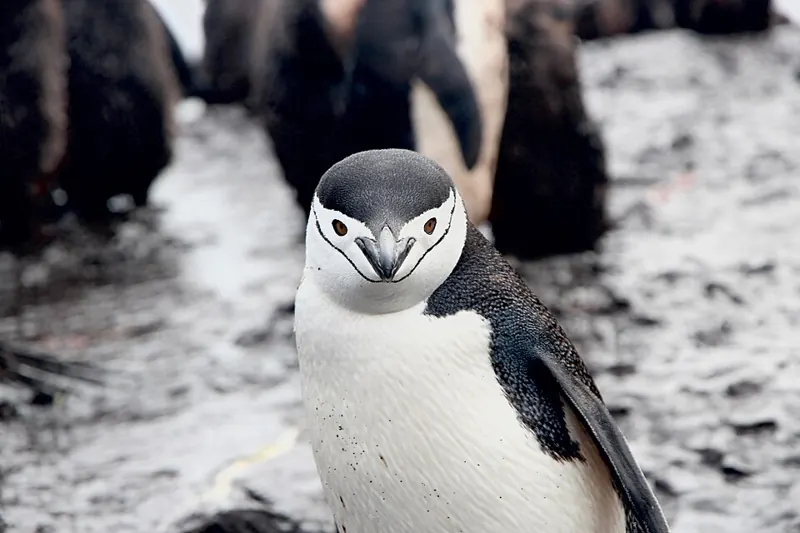
- Chinstrap penguins are named for the narrow band of black feathers that runs from ear to ear just below the chin. They weigh 3.5 to 5.5 kg. Australian Antarctic Division: Chinstrap penguin
- Chinstrap penguins mainly eat krill and fish, and usually feed less than 40 metres down. Australian Antarctic Division: Chinstrap penguin
- Chinstrap penguins can live to be 16 to 20 years old. Australian Antarctic Division: Chinstrap penguin
- Recent evidence suggests chinstrap numbers are falling significantly because of reductions in krill, their main food. Australian Antarctic Division: Chinstrap penguin
- Chinstrap penguins that live south of 60° South are protected under the Antarctic Treaty System. Australian Antarctic Division: Chinstrap penguin
- Chinstrap penguin: Least Concern on the IUCN Red List (last assessed 2020). Population trend: decreasing. IUCN Red List: Chinstrap penguin · checked 27 Oct 2026
No. 06 · Eudyptes chrysolophus
Macaroni penguin
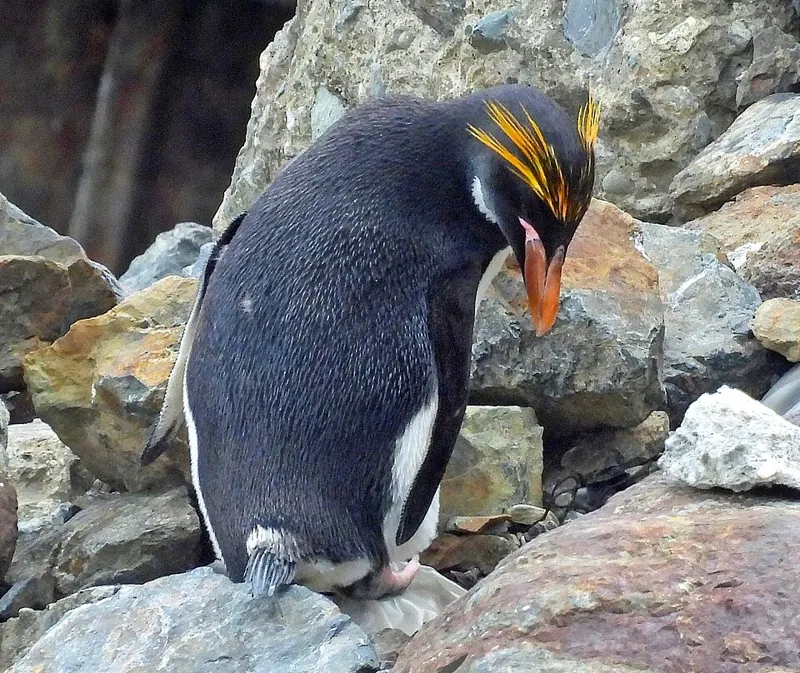
- The macaroni penguin’s scientific name means ‘good diver’ (Eudyptes) ‘with a golden crest’ (chrysolophus). Australian Antarctic Division: Macaroni penguin
- The Smithsonian calls macaroni penguins the most abundant of all penguins. Smithsonian Ocean: Penguins
- Macaroni penguins lay two eggs, but the second is bigger and is usually the only one that hatches. Australian Antarctic Division: Macaroni penguin
- Macaroni penguin: Vulnerable on the IUCN Red List (last assessed 2020). Population trend: decreasing. IUCN Red List: Macaroni penguin · checked 27 Oct 2026
- Macaroni penguin breeding pairs were estimated at 6.3 million in 2013, a rapid decline from previous decades. Australian Antarctic Division: Macaroni penguin · checked 27 Oct 2026
No. 07 · Eudyptes schlegeli
Royal penguin
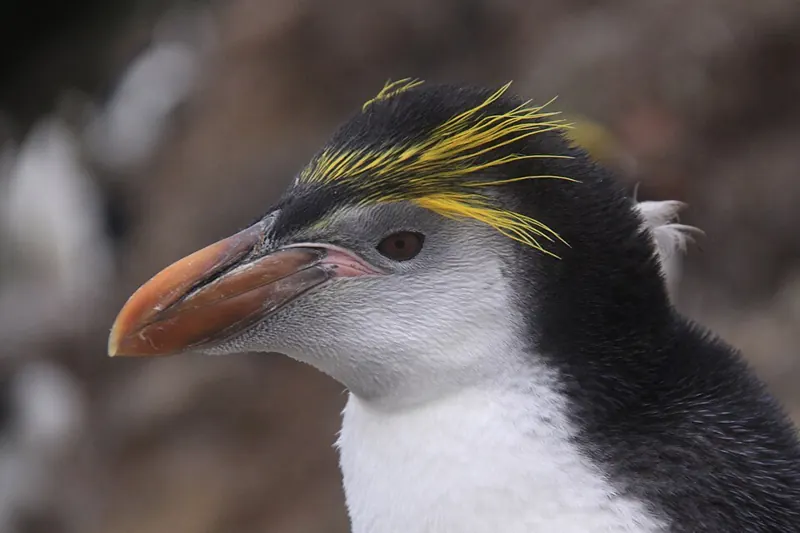
- Royal penguins look like macaroni penguins but are up to 20% larger, with white to pale grey faces instead of black. Australian Antarctic Division: Royal penguin
- Royal penguins are endemic to Macquarie Island, where the vast majority live, and the nearby Bishop and Clerk Islets, where about 1,000 pairs breed. Australian Antarctic Division: Royal penguin
- The largest royal penguin colony, at Hurd Point on Macquarie Island, has around 500,000 pairs. Australian Antarctic Division: Royal penguin · checked 27 Oct 2026
- Royal penguin: Least Concern on the IUCN Red List (last assessed 2021). Population trend: unknown. IUCN Red List: Royal penguin · checked 27 Oct 2026
- The Australian Antarctic Division’s royal penguin page gives its conservation status as near threatened. Australian Antarctic Division: Royal penguin · checked 27 Oct 2026
- A Britannica picture caption calls the royal penguin vulnerable because its breeding area is so small. Britannica: Penguin · checked 27 Oct 2026
No. 08 · Eudyptes chrysocome
Southern rockhopper penguin
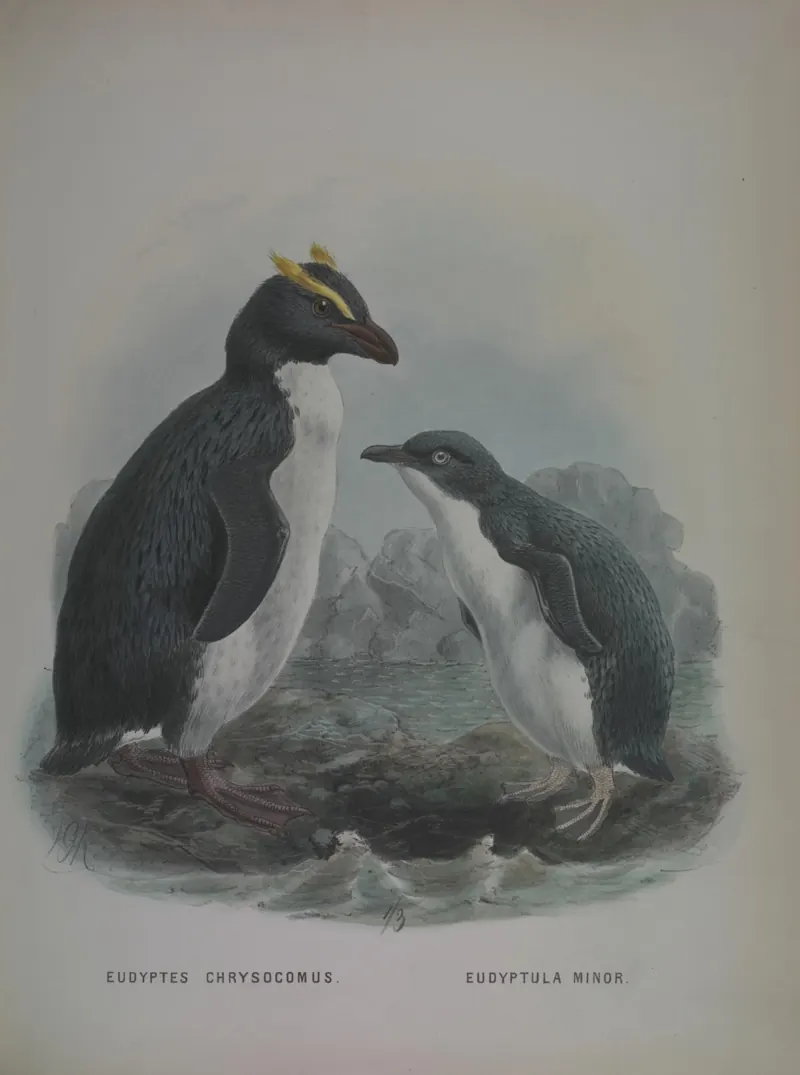
- Southern rockhopper penguins are the smallest of the crested penguins, weighing only 2 kg to 3.8 kg. Australian Antarctic Division: Southern rockhopper penguin
- Rockhopper penguins are the only species to jump feet first into the water when they dive. Smithsonian Ocean: Penguins
- Southern rockhopper penguin: Vulnerable on the IUCN Red List (last assessed 2020). Population trend: decreasing. IUCN Red List: Southern rockhopper penguin · checked 27 Oct 2026
No. 09 · Eudyptes moseleyi
Northern rockhopper penguin
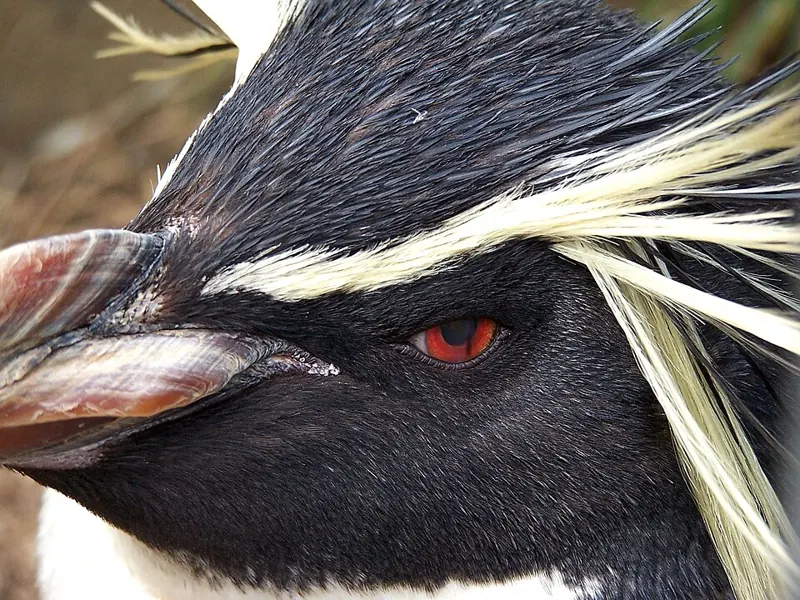
- Northern rockhopper penguin: Endangered on the IUCN Red List (BirdLife’s factsheet gives 2020 as the last assessment). Population trend: decreasing. BirdLife International: Northern rockhopper penguin factsheet · checked 27 Oct 2026
- BirdLife International gives the northern rockhopper’s population as 413,700 mature individuals. BirdLife International: Northern rockhopper penguin factsheet · checked 27 Oct 2026
No. 10 · Eudyptes pachyrhynchus
Fiordland penguin
We haven’t found a public domain or CC0 photo of this penguin that we can be sure is labelled correctly, so there’s no picture yet.
- Some fiordland and rockhopper penguins have been found with barnacles growing on their feathers! Smithsonian Ocean: Penguins
- Fiordland penguin: Near Threatened on the IUCN Red List (last assessed 2020). Population trend: decreasing. IUCN Red List: Fiordland penguin · checked 27 Oct 2026
No. 11 · Eudyptes robustus
Snares penguin
We haven’t found a public domain or CC0 photo of this penguin that we can be sure is labelled correctly, so there’s no picture yet.
- Snares penguin: Vulnerable on the IUCN Red List (last assessed 2018). Population trend: stable. IUCN Red List: Snares penguin · checked 27 Oct 2026
No. 12 · Eudyptes sclateri
Erect-crested penguin
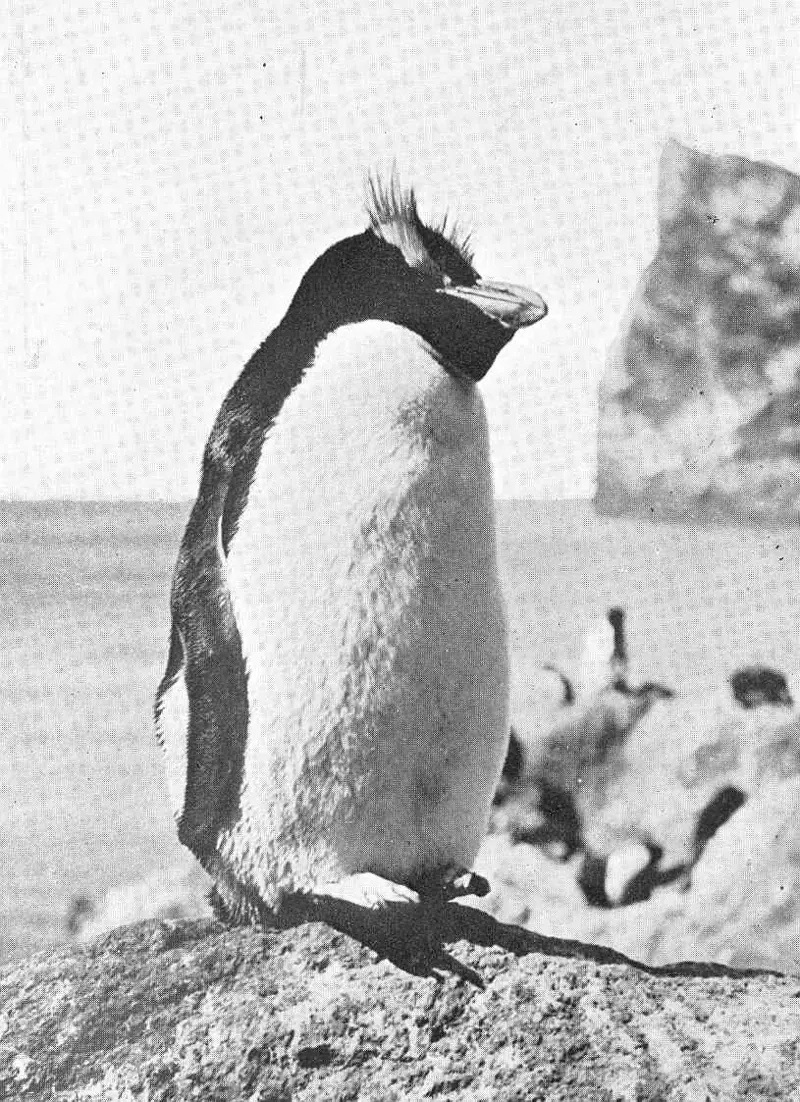
- Erect-crested penguin: Endangered on the IUCN Red List (last assessed 2020). Population trend: decreasing. IUCN Red List: Erect-crested penguin · checked 27 Oct 2026
No. 13 · Megadyptes antipodes
Yellow-eyed penguin (hoiho)
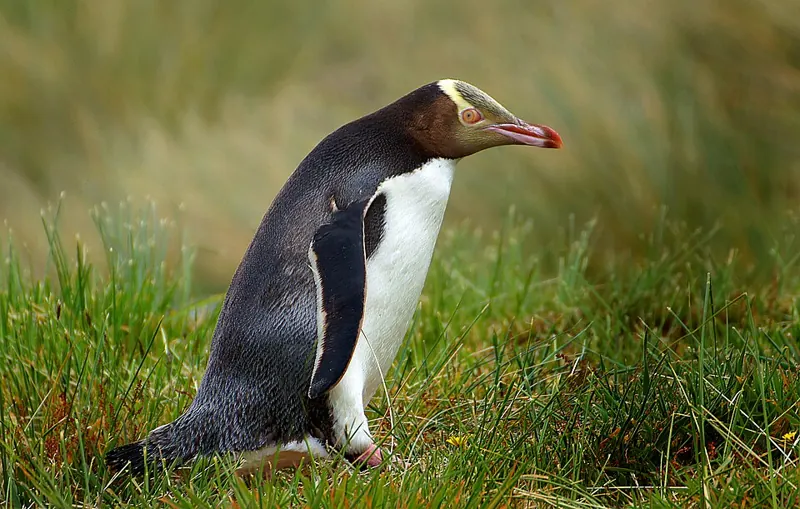
- The Māori name for the yellow-eyed penguin, hoiho, means ‘noise shouter’, after its shrill call. NZ Department of Conservation: Yellow-eyed penguin/hoiho
- The hoiho is found only in New Zealand and is thought to be one of the world’s rarest penguins. NZ Department of Conservation: Yellow-eyed penguin/hoiho
- There are two populations of hoiho: one on the South Island and Stewart Island/Rakiura, and one on the subantarctic Auckland and Campbell Islands. NZ Department of Conservation: Yellow-eyed penguin/hoiho
- During the moult, a hoiho must sit ashore for 25 days to grow new feathers, and can’t go to sea to feed. NZ Department of Conservation: Yellow-eyed penguin/hoiho
- Hoiho face disease, predators, starvation, set nets, dog attacks and climate-driven changes in their food. NZ Department of Conservation: Yellow-eyed penguin/hoiho
- Yellow-eyed penguin: Endangered on the IUCN Red List (last assessed 2020). Population trend: decreasing. IUCN Red List: Yellow-eyed penguin · checked 27 Oct 2026
- In New Zealand’s own threat system, the hoiho is ‘Threatened–Nationally Endangered’, with 4,000–5,000 mature individuals in 2019. NZ Department of Conservation: Yellow-eyed penguin/hoiho · checked 27 Oct 2026
- The northern population of hoiho fell from about 741 breeding pairs in 1999 to 265 in 2019, a 65% fall in 20 years. NZ Department of Conservation: Yellow-eyed penguin/hoiho · checked 27 Oct 2026
No. 14 · Eudyptula minor
Little penguin (kororā)
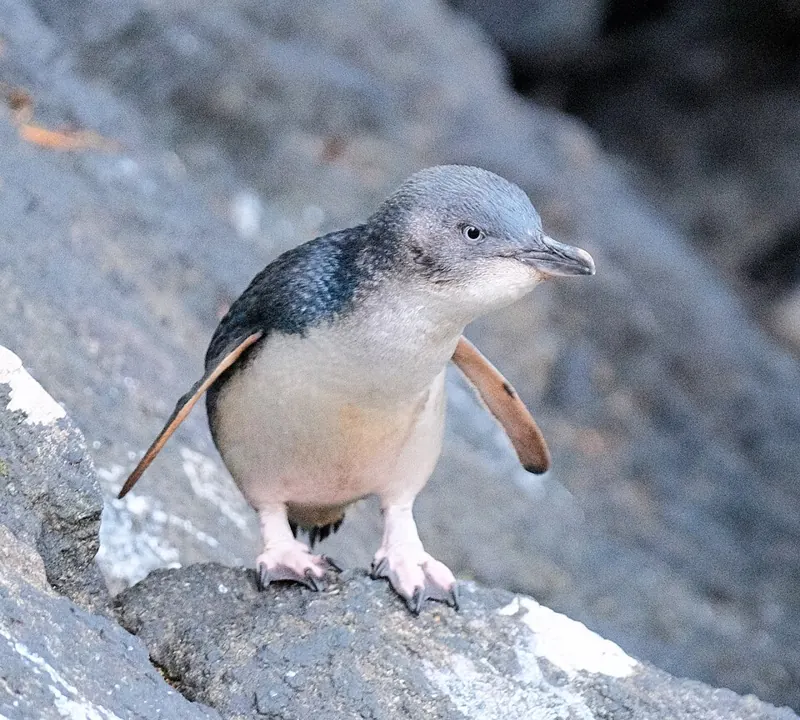
- The Department of Conservation calls the little penguin the world’s smallest penguin: just over 25 cm and about 1 kg. NZ Department of Conservation: Little penguin/kororā
- The Smithsonian puts the little (or fairy) penguin at about a foot tall (0.33 m) in one place, and 12 inches (24 cm) in its species notes. Smithsonian Ocean: Penguins
- Britannica gives the blue, or fairy, penguin as about 35 cm tall and about 1 kg. Britannica: Penguin
- The little penguin used to be called the little blue penguin. NZ Department of Conservation: Little penguin/kororā
- New Zealand’s Department of Conservation says little penguins ‘fly’ through the water at up to 6 km/h. NZ Department of Conservation: Little penguin/kororā
- Little penguins may waddle up to 1.5 km from the sea, and climb 300 m, to find the perfect nest site. NZ Department of Conservation: Little penguin/kororā
- Little penguins are rarely seen on land, and usually only come ashore after dark. NZ Department of Conservation: Little penguin/kororā
- Dogs are likely the greatest threat to little penguins in New Zealand. Cats, ferrets and stoats also kill them. NZ Department of Conservation: Little penguin/kororā
- Little penguin: Least Concern on the IUCN Red List (last assessed 2020). Population trend: stable. IUCN Red List: Little penguin · checked 27 Oct 2026
- In New Zealand, the little penguin’s status is ‘At Risk–Declining’. NZ Department of Conservation: Little penguin/kororā · checked 27 Oct 2026
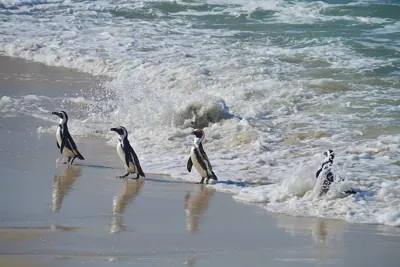
No. 15 · Spheniscus demersus
African penguin
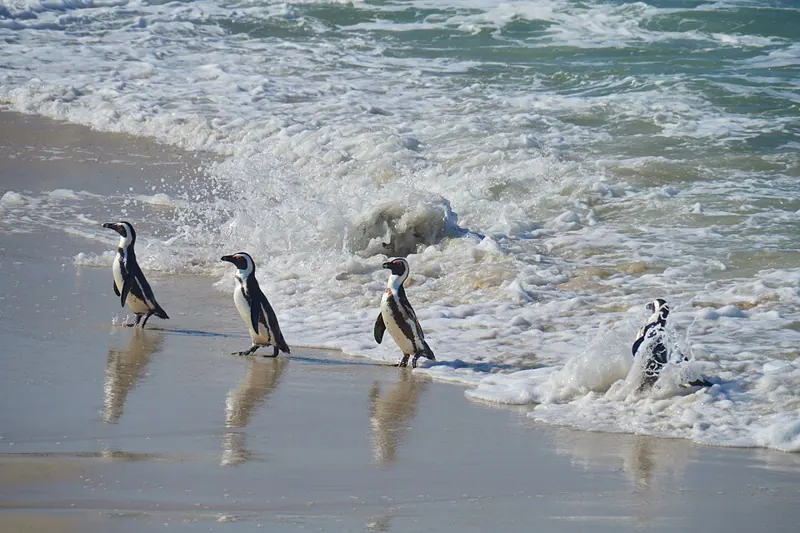
- African penguin: Critically Endangered on the IUCN Red List (last assessed 2024). Population trend: decreasing. IUCN Red List: African penguin · checked 27 Oct 2026
- The Smithsonian notes that, as of 2024, the IUCN lists the African penguin as critically endangered. Smithsonian Ocean: Penguins · checked 27 Oct 2026
- The Smithsonian says there are below 200,000 African penguins, compared with 1.4 million at the start of the twentieth century. Smithsonian Ocean: Penguins · checked 27 Oct 2026
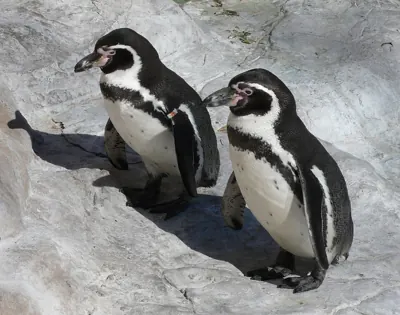
No. 16 · Spheniscus humboldti
Humboldt penguin
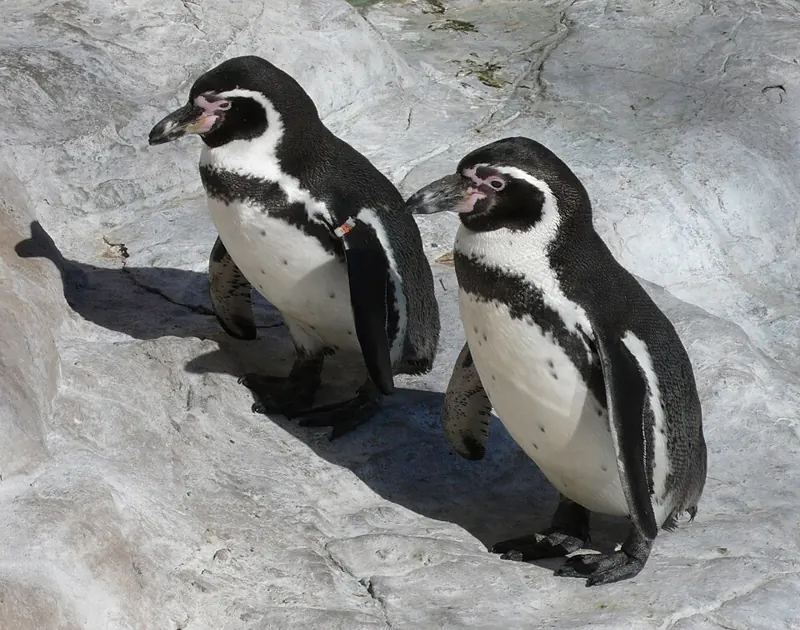
- The Humboldt penguin lives on the shores of the Atacama Desert in Chile and Peru, the driest desert in the world. Smithsonian Ocean: Penguins
- Humboldt penguin: Vulnerable on the IUCN Red List (last assessed 2020). Population trend: decreasing. IUCN Red List: Humboldt penguin · checked 27 Oct 2026
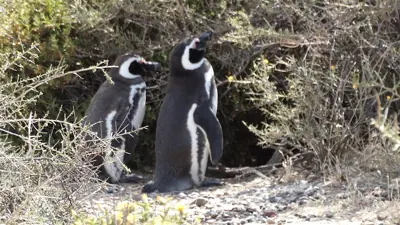
No. 17 · Spheniscus magellanicus
Magellanic penguin
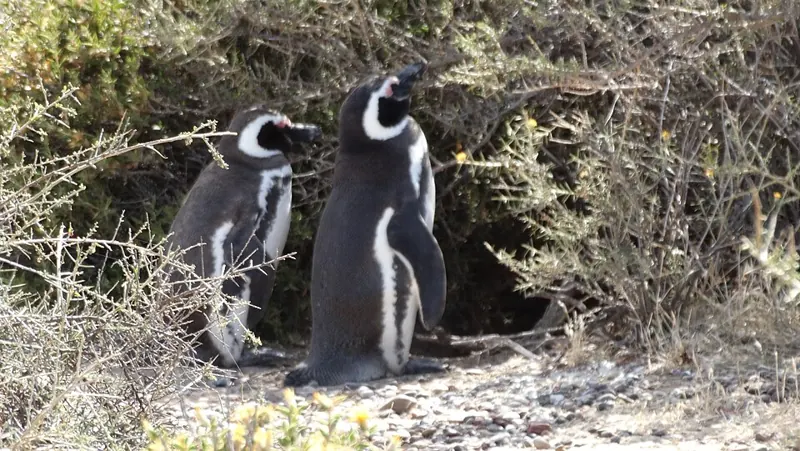
- Magellanic penguin: Least Concern on the IUCN Red List (last assessed 2020). Population trend: decreasing. IUCN Red List: Magellanic penguin · checked 27 Oct 2026
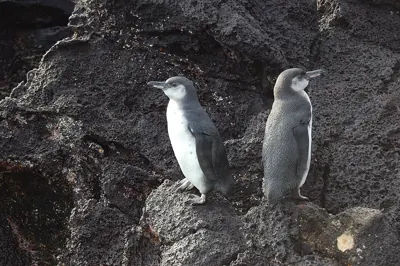
No. 18 · Spheniscus mendiculus
Galápagos penguin
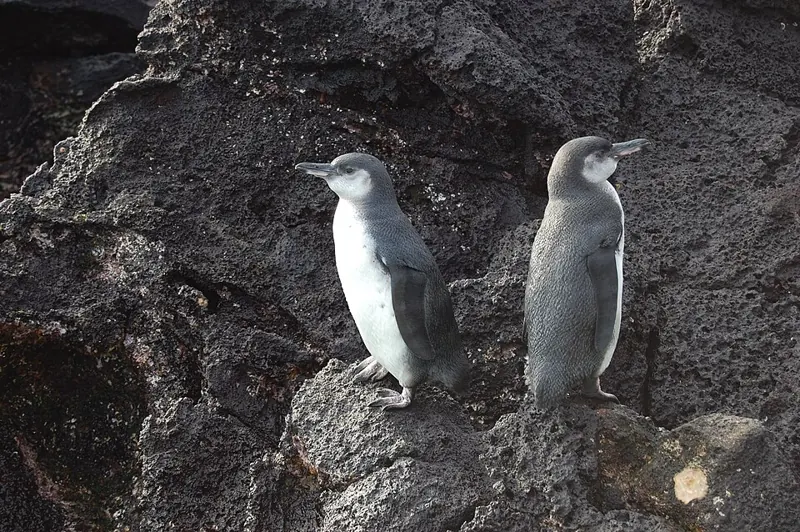
- Galápagos penguins are the most northerly penguins, living on the Galápagos Islands on the equator. Smithsonian Ocean: Penguins
- Galápagos penguin: Endangered on the IUCN Red List (last assessed 2020). Population trend: decreasing. IUCN Red List: Galápagos penguin · checked 27 Oct 2026