Eggs, huddles and chicks
Penguins lay one or two eggs, share the work (mostly) and raise chicks that end up in a fluffy crowd. The emperor does all of it in the dark of the Antarctic winter.
Breeding in the worst weather on Earth
Emperor penguins don’t just survive the Antarctic winter: they breed in it, during the worst weather on Earth. Australian Antarctic Division: Emperor penguin Emperor parents share chick-rearing, but only the males incubate the egg. Australian Antarctic Division: Emperor penguin
The British Antarctic Survey says the male emperor incubates the single egg for 9 weeks without eating, living off a thick fat reserve. British Antarctic Survey: Penguins The Smithsonian says the male emperor incubates the egg for roughly 64 days in the dead of winter, huddled with other males while the females feed. Smithsonian Ocean: Penguins
Britannica says the female emperor must often walk 80 to 160 km (50 to 100 miles) from the colony to the sea. Britannica: Penguin
- The British Antarctic Survey says the male emperor incubates the single egg for 9 weeks without eating, living off a thick fat reserve. British Antarctic Survey: Penguins
- The Smithsonian says the male emperor incubates the egg for roughly 64 days in the dead of winter, huddled with other males while the females feed. Smithsonian Ocean: Penguins
Nine weeks is 63 days, so these are close but not the same. Every disagreement we found →
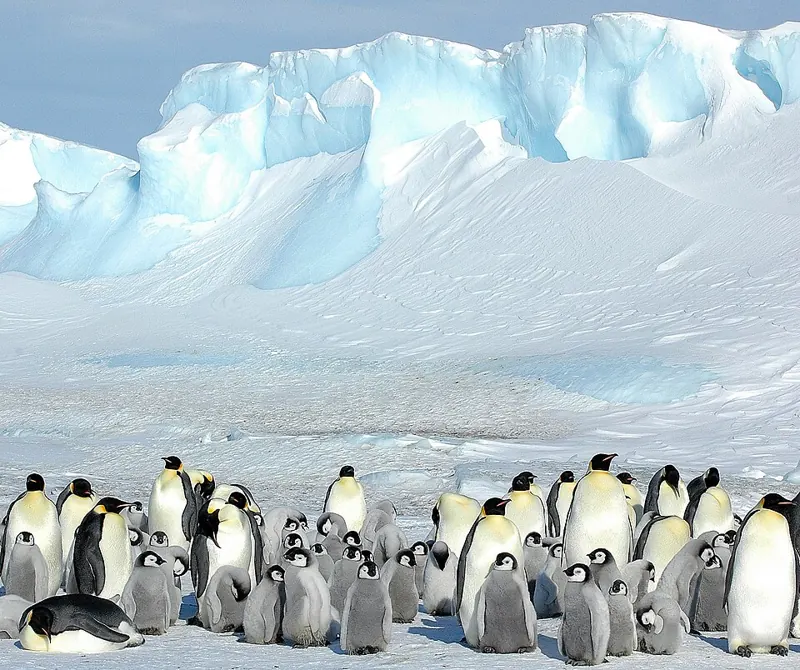
The huddle
On very cold days, as many as 10 emperors pack into every square metre of a huddle. Australian Antarctic Division: Emperor penguin Huddling cuts heat loss by as much as 50%, and the temperature inside a huddle can reach +24 °C. Australian Antarctic Division: Emperor penguin
Huddles slowly move downwind as birds take turns. In a 48-hour blizzard, a huddle may shift as much as 200 metres. Australian Antarctic Division: Emperor penguin Emperor colonies face blizzards of up to 200 km/h. Australian Antarctic Division: Emperor penguin
The emperor is the only penguin species that is not territorial. Australian Antarctic Division: Emperor penguin
Feeding the chick
An emperor chick needs about 42 kg of food from each parent. Australian Antarctic Division: Emperor penguin An adult emperor eats 2–3 kg a day, and up to 6 kg a day when fattening up before a moult or breeding. Australian Antarctic Division: Emperor penguin
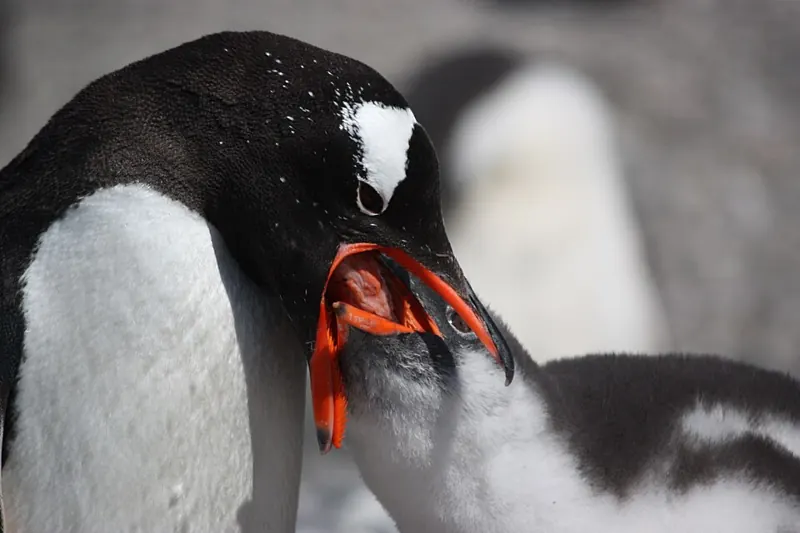
Eggs on feet, eggs in pebbles
King penguins don’t build a nest: they incubate the egg on their feet, for about 54 days. Australian Antarctic Division: King penguin King penguins have a longer breeding cycle than any other penguin: 13 to 16 months, including the pre-moult period. Australian Antarctic Division: King penguin
Adélie penguins need ice-free land with lots of pebbles to build their nests. By mid-November there are 2 eggs in the nest. Australian Antarctic Division: Adélie penguin
Gentoo penguins lay two eggs, incubated for 34–37 days. Chicks start to gather in crèches at about 26 days old and fledge at 80–90 days. Australian Antarctic Division: Gentoo penguin Macaroni penguins lay two eggs, but the second is bigger and is usually the only one that hatches. Australian Antarctic Division: Macaroni penguin
Most penguins share egg incubations of between 33 and 56 days, depending on the species. Smithsonian Ocean: Penguins A chick breaks out of its egg using an egg tooth, a sharp bump on the top of the bill. Smithsonian Ocean: Penguins
Crèches
When both parents are away feeding, older chicks huddle together in groups called crèches. Parents find their own chick by its call. Smithsonian Ocean: Penguins
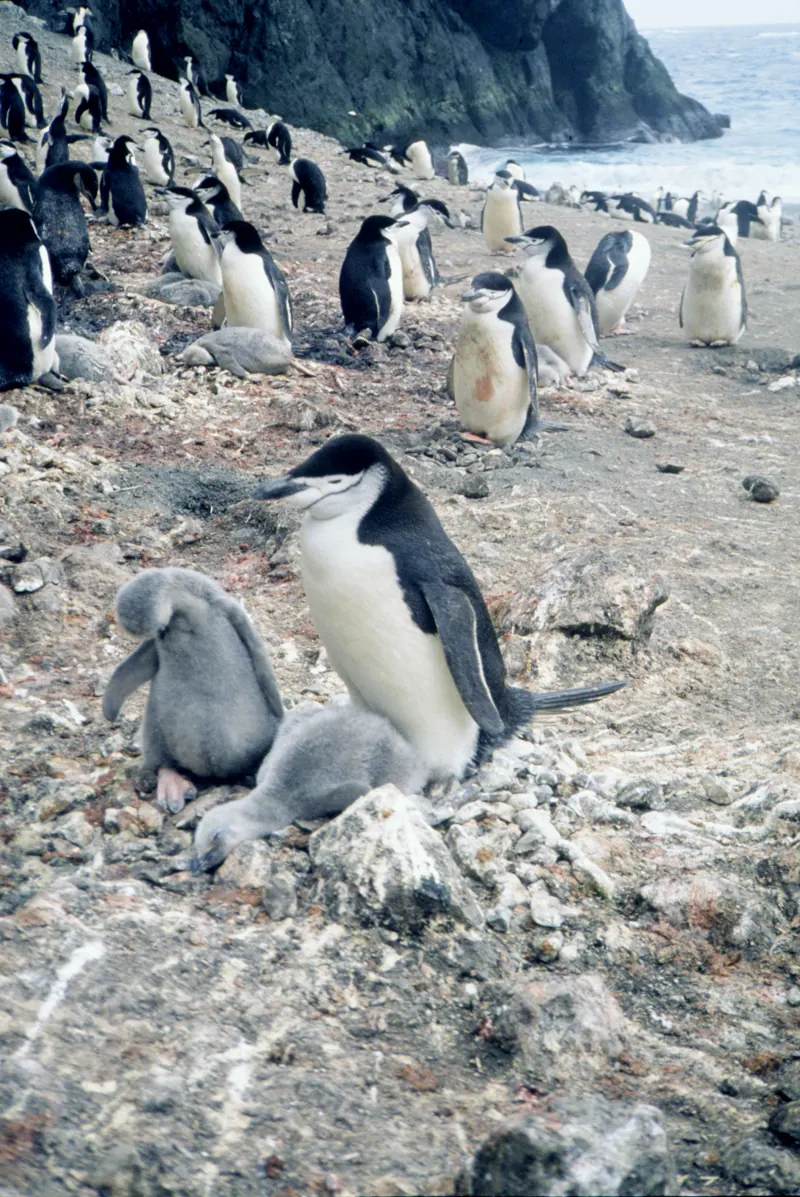
Coming ashore
Adélie penguins spend winter in the pack ice, coming to the coast in summer for a brief, intense breeding season. British Antarctic Survey: Penguins
Little penguins may waddle up to 1.5 km from the sea, and climb 300 m, to find the perfect nest site. NZ Department of Conservation: Little penguin/kororā Little penguins are rarely seen on land, and usually only come ashore after dark. NZ Department of Conservation: Little penguin/kororā
During the moult, a hoiho must sit ashore for 25 days to grow new feathers, and can’t go to sea to feed. NZ Department of Conservation: Yellow-eyed penguin/hoiho
How long do penguins live?
Adélie penguins have a life expectancy of 10 to 20 years. Australian Antarctic Division: Adélie penguin Chinstrap penguins can live to be 16 to 20 years old. Australian Antarctic Division: Chinstrap penguin
- The Australian Antarctic Division says some emperors live to more than 40 years, though most don’t live that long in the wild. Australian Antarctic Division: Emperor penguin
- National Geographic gives the emperor’s average life span in the wild as 15 to 20 years. National Geographic: Emperor penguin
Not a true clash: one is the oldest, the other the average. Every disagreement we found →
Next: where penguins live →